
Indonesia’s upstream oil and gas industry continues to face growing demands for greater efficiency, accuracy, and operational resilience. At the same time, rapid advances in artificial intelligence, data analytics, automation, and connected technologies are changing how energy companies monitor assets, manage operations, and make critical decisions.
However, digital transformation also introduces new challenges. As more operational systems become connected, energy infrastructure faces increasing exposure to cyber threats and other forms of digital disruption. For this reason, the future of energy technology requires more than simply adopting new digital solutions. It requires an ecosystem that can combine innovation, operational efficiency, data governance, and resilience.
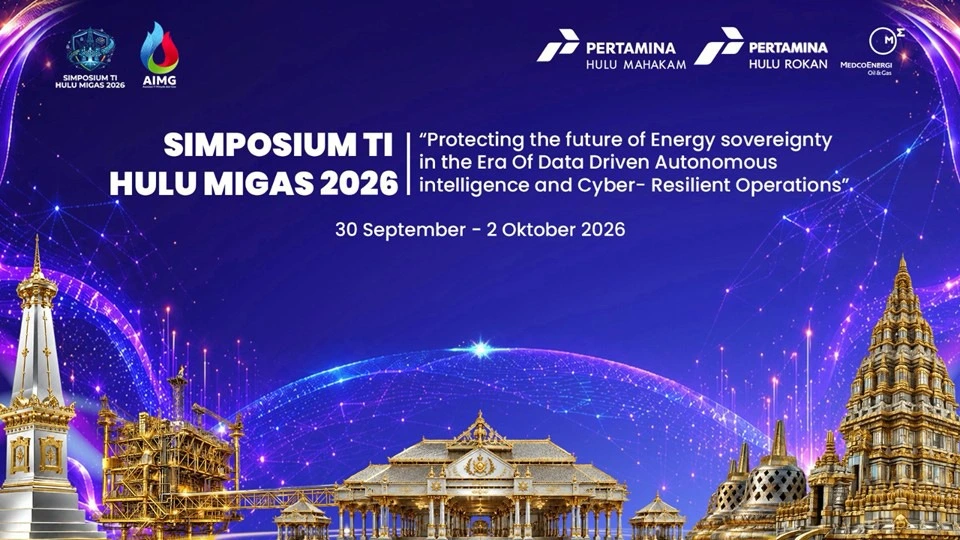
These issues will take center stage at Simposium TI Hulu Migas 2026, which will be held at Hotel Marriott Yogyakarta from 30 September to 2 October 2026. The symposium carries the theme, “Protecting the Future of Energy Sovereignty in the Era of Data-Driven Autonomous Intelligence and Cyber-Resilient Operations.”
Simposium TI Hulu Migas 2026 Brings Technology Stakeholders Together
Simposium TI Hulu Migas 2026 focuses on the increasingly important relationship between technology and the future of Indonesia’s upstream oil and gas industry.
According to the event organizers, the global energy industry has begun adopting data-driven autonomous systems and artificial intelligence to improve production efficiency, distribution accuracy, and operational cost optimization. At the same time, the increasing digitalization of energy infrastructure creates new risks, particularly from cyberattacks targeting critical systems.
The symposium therefore provides a platform to align the vision, understanding, and actions of technology providers, business stakeholders, government institutions, and other parties involved in the energy ecosystem.
Rather than viewing digital transformation as an isolated technology initiative, the event highlights the importance of building an energy ecosystem that is both smart and resilient.
From Digitalization to Autonomous Operations
Digital transformation in the energy industry has progressed beyond simply replacing manual processes with digital tools. Today, organizations are increasingly exploring how data and artificial intelligence can support faster and more informed operational decisions.
The evolution can be viewed through a simple progression:
Data → Intelligence → Automation → Autonomous Decision Support
With access to reliable operational data, organizations can gain better visibility into their assets and processes. Artificial intelligence can then help identify patterns, generate insights, and support decision-making. As these capabilities mature, automation can take over repetitive processes and provide faster responses to changing operational conditions.
For upstream oil and gas companies, these developments can contribute to improved operational efficiency, more accurate monitoring, optimized resources, and better decision-making.
However, greater automation also requires greater oversight. The symposium highlights the importance of ensuring that AI remains under appropriate supervision and within the framework of domestic policies and control.
This balance between innovation and control will become increasingly important as energy operations become more dependent on intelligent digital systems.
Cyber Resilience Becomes Essential for Digital Energy Infrastructure
While digitalization creates significant opportunities, it also changes the risk landscape.
Energy infrastructure represents critical national assets. As operational environments become increasingly connected, vulnerabilities within IT and operational technology environments can potentially have consequences that extend beyond individual systems.
Cybersecurity, therefore, should not be treated as an afterthought.
Organizations need to consider how their technology infrastructure can continue supporting operations when facing disruptions, unauthorized access, system failures, or other digital threats.
This is where the concept of cyber resilience becomes increasingly relevant.
Cyber resilience goes beyond preventing attacks. It also involves preparing systems and organizations to detect disruptions, respond effectively, maintain critical operations, and recover when incidents occur.
For the upstream oil and gas industry, this perspective is particularly important because operational continuity can depend on the availability and reliability of multiple interconnected systems.
The theme of Simposium TI Hulu Migas 2026 reflects this challenge by placing cyber-resilient operations alongside artificial intelligence and data-driven autonomous intelligence.
The Role of Control Rooms in Data-Driven Oil & Gas Operations
As energy companies generate and process increasing amounts of operational data, the ability to visualize and interpret that information becomes just as important as collecting it.
This makes modern control rooms and command centers an important part of the digital operations environment.
A well-designed control room can bring information from multiple sources into a centralized environment, allowing operators and decision makers to monitor conditions, identify changes, communicate with relevant teams, and respond to operational situations.
Depending on the requirements of the organization, such environments can incorporate:
- Large-format video walls
- Real-time data visualization
- Operator displays and workstations
- Centralized monitoring systems
- Audio communication systems
- Video conferencing
- Integrated control systems
- Collaboration technologies
The objective is not simply to install more screens or equipment. Instead, the technology needs to work together as an integrated environment that helps people understand information and make decisions more effectively.
For complex energy operations, this integration can contribute to better situational awareness, enabling teams to see relevant information in context rather than working with disconnected sources of data.
Integrated Collaboration Environments for Energy Operations
Control rooms are only one part of the technology environment required by modern energy organizations.
Upstream oil and gas operations also involve collaboration between teams, management, field personnel, technical specialists, contractors, and other stakeholders. These teams may operate from different locations and require reliable communication when making operational decisions.
Meeting and collaboration environments can therefore play an important role.
Modern meeting rooms can integrate video conferencing, professional audio, interactive displays, wireless presentation, room control, and other technologies into a single environment.
These capabilities can support activities such as:
- Operational meetings
- Remote collaboration
- Technical discussions
- Management briefings
- Emergency coordination
- Cross-location communication
- Decision-making sessions
When designed correctly, these environments become more than conventional meeting rooms. They become part of the organization’s broader digital collaboration infrastructure.
INTAV’s Perspective: Building Technology Environments for Smarter Operations
As digital transformation continues to reshape the energy industry, technology infrastructure must evolve alongside operational requirements.
INTAV supports organizations in designing and implementing integrated technology environments for communication, visualization, collaboration, and decision-making.
For industries with complex operational requirements, this can include solutions for control rooms, command centers, meeting rooms, collaboration environments, and integrated audiovisual infrastructure.
The role of an integrated technology environment is to connect people with the information they need, when they need it. This requires careful consideration of system architecture, room design, user requirements, connectivity, visualization, audio, control, and operational reliability.
In an oil and gas environment, these considerations become even more important because technology must support teams working with critical information and time-sensitive decisions.
By approaching audiovisual and collaboration technology as part of the broader operational environment, organizations can create spaces that are better prepared to support modern, data-driven workflows.
Building a Smarter and More Resilient Energy Ecosystem
The future of upstream oil and gas will depend increasingly on how effectively organizations combine technology with operational expertise.
Artificial intelligence can generate new insights. Data can provide greater visibility. Automation can improve efficiency. However, these capabilities need to operate within an ecosystem that maintains appropriate control, security, communication, and human oversight.
This is why discussions around digital transformation cannot be separated from discussions about resilience.
Simposium TI Hulu Migas 2026 provides an opportunity for stakeholders across the energy ecosystem to explore these challenges and consider how technology can contribute to a smarter, more resilient, and more sovereign energy industry.
For organizations preparing their operations for this future, the focus should not only be on adopting the latest technology. It should also be on creating an integrated environment where data, people, technology, and decision-making can work together effectively.
Supporting the Future of Connected Operations
INTAV understands that every organization has different operational requirements. From control rooms and command centers to meeting and collaboration spaces, technology needs to be designed around the people, processes, and objectives it supports.
With an integrated approach to audiovisual and technology environments, INTAV helps organizations create spaces that support better communication, visualization, collaboration, and decision-making.
Looking to develop a connected control room, command center, or collaboration environment for your organization? Contact INTAV to explore an integrated technology solution designed around your operational needs.

